
Open Versus Closed Concept


A brief survey of architectural history will show you that closed concept homes - a separate, closed room for each space - was prevalent throughout history. Every thing had a place. Every room had a purpose. And, each room was separated with a door or doorway. In the last couple of decades a shift took place and open concept homes took center stage. People everywhere started knocking out walls to create large, multi-functional spaces. Why have we seen this trend grow?
A lot of it has to do with the way we do life now. Mothers want to be able to cook while watching their kids play. Dads want to be able to wash dishes while also watching a football game. With the shift in American culture of both parents working full-time and children attending school out of the home, families are wanting to maximize the time they spend together by having one large, open space. However, many often feel their homes are always cluttered and noisy, which can cause its own amount stress. In the last few years, we are now seeing a move away from fully open-concept homes. Can there be a happy balance and a blend of both? Absolutely. You just need to fine-tune the footprint of your home and clearly define how you use each space.
As an interior designer, I walk through the space with my clients to observe how they function in the space. If a young mother needs to keep an eye on her little ones while cooking dinner, then a small corner in sight of the kitchen is necessary to the function and flow of the home for this specific family. This isn't only accomplished by knocking a wall, rather it's accomplished through purposeful planning of the space. A breakfast nook area can be turned into a small play corner that still allows the mother sight-lines of her children without creating a huge vacuum of unused space where toys are strewn about and voices echo. If you enjoy entertaining and cooking for your guests, you may feel you need a fully open-concept layout where the kitchen, dining and living rooms are all one. You can save yourself the thousands of dollars of opening a wall and instead create meaningful conversational spaces in the kitchen for guests to mingle while you cook. Then you can leave the mess in the kitchen area and migrate to the cozy living room space.
I'm a huge Downton Abbey fan and they often use the phrase, "Shall we go through?" Going through requires that rooms are somewhat closed off, providing clear delineation between spaces. Conversations are heard more easily in a closed-concept design because the noise doesn't travel across vast spaces. Guests and homeowners feel cozier because small, intentional spaces have been created rather than large, empty spaces. Messes are closed off and able to be contained, minimizing stress and that constant feeling of endless clutter.
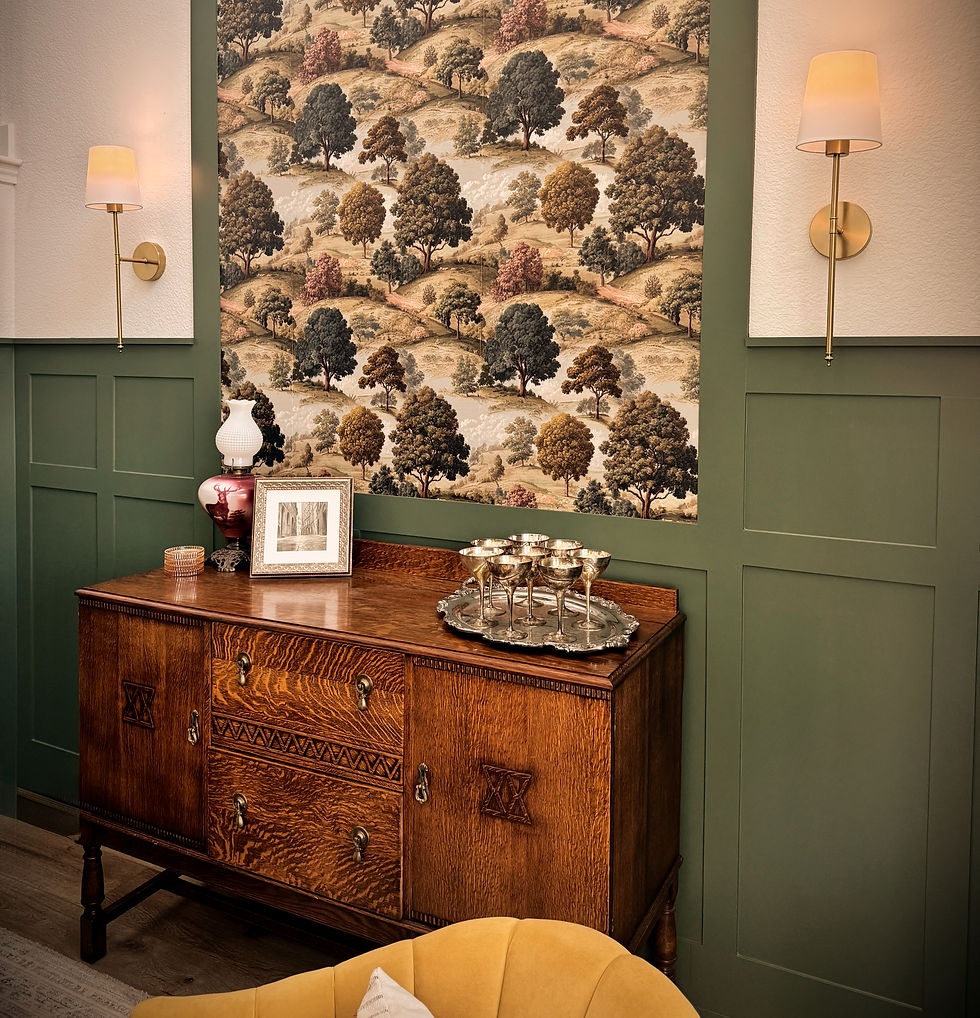
So, my advice: work with the wall. Put comfy barstools around the kitchen island or a small sofa in the breakfast nook to facilitate conversations while cooking. Consider using glass doors to differentiate between common spaces. This allows the visual sight-lines to remain open while also balancing the noise and containing the mess. More wall space equals more art space. Fill your walls with color of canvases and pictures of the people and places you love most. An oddly shaped corner could become your favorite nook in the house. The possibilities are endless, so get creative with creating a space that is uniquely yours. Think outside the box. I think you'll come to love the walls.


I like that you brought attention to the fact that not everyone appreciates an open concept house. I waiver because I like a separate room for everything, but I want to feel like I’m in a wide open space.
I’m from the Deep South where I grew up in plantation homes of different family members. We shifted into different rooms depending on the purpose of the room and the time of day. Changing rooms for a different activity or conversation was the way we would transition through the day or through our visits with family.
I often feel that open concept can be over stimulating and overwhelming. Having a separate room for a separate mess helps compartmentalize. It also helps…